Introduction
John F. Kennedy International Airport is one of America's busiest international gateways. According to the Port Authority's 2023 annual report, the airport served approximately 62 million passengers that year, bearing the responsibility of connecting New York to the world. But for residents of Queens communities like Howard Beach, Jamaica, and South Ozone Park, the airport's presence is far more complicated than statistics can convey.
While preparing this article, I interviewed several local residents. One woman who has lived in Howard Beach for over thirty years—she asked me to call her Maria, no last name—told me: "You ask me how I feel about the airport? My husband worked there for twenty years, my son works there now. But when I get woken up every night, I still curse a little." After saying this, she added a lot about her husband's bad knees and possible early retirement—nothing to do with the airport, but you could feel that this family's life revolves around that place.
This article attempts to present the complete picture of JFK's relationship with surrounding communities—including those gray areas that aren't so easy to categorize.
Noise: The Most Direct and Most Difficult Problem to Solve
Noise is the most direct point of conflict. Port Authority data shows JFK averages approximately 1,200 flight operations per day. I reviewed FAA noise monitoring records, and at monitoring points in Howard Beach, peak noise during takeoffs and landings frequently reaches 75-82 decibels, occasionally exceeding 85 decibels.
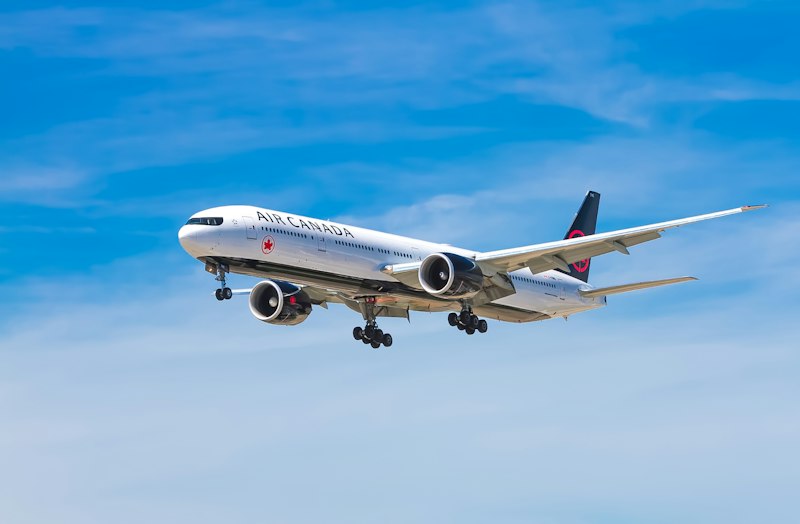
A retired teacher living in Ozone Park—he would only give his first name, James—described his daily life this way: "We have a small garden in our backyard. In summer, we'd like to eat dinner outside. But basically every two or three minutes there's a plane overhead, so loud you have to stop and wait for it to pass. You can't have a normal conversation."
James's neighbor, Diane Foster—the only person in my interviews who proactively said "you can use my full name"—added that what bothers her most is the night flights. "They start after 4 AM, sometimes after 3 AM. You think you're used to it, but actually you never really get used to it."
I asked if she had ever measured the actual decibel levels. She said no, "but my daughter bought a phone app and measured it a few times, said it was over seventy." I can't verify this detail, but it might say more about the problem than official monitoring data—after all, there are only so many monitoring points.
You think you're used to it, but actually you never really get used to it.
— Diane Foster, Howard Beach residentThe harm from noise goes beyond mere annoyance. A 2023 study published in Environmental Health Perspectives tracked fifteen years of health data from residents near Los Angeles Airport, finding that populations chronically exposed to aviation noise above 65 decibels had a 12-15% increased risk of cardiovascular disease. While this study focused on LAX rather than JFK, the noise levels and community distributions are similar between the two airports.
Air quality is another issue, though it doesn't remind you of its existence every day like noise does. Nitrogen oxides and ultrafine particulate matter from airport operations, combined with dense ground traffic on the Van Wyck Expressway and Belt Parkway, can form localized pollution under certain weather conditions. Jamaica Bay, adjacent to the airport runways, faces threats to its wetland ecosystem from de-icing agent runoff and occasional fuel spills—one occurred in 2019 when a small amount of aviation fuel entered the water.
Who Lives Here, Who Bears the Burden
Open a demographic map, and one fact is hard to ignore: the communities most severely affected by the airport—Jamaica, South Ozone Park, Springfield Gardens—happen to be among New York City's most racially and economically disadvantaged areas. According to U.S. Census Bureau 2020 data, Black and Latino residents comprise over 80% of these communities' populations, and median household income is 20-30% below the citywide average.
Some would say this is historical coincidence. But if you've read Kenneth Jackson's Crabgrass Frontier or Richard Rothstein's The Color of Law, you know that "who lives where" in American cities has never been random. When the airport site was selected in the 1940s, this area was swampland and farmland with virtually no political opposition. Subsequent urban expansion and housing policies systematically channeled minority groups to these areas.
I don't want to oversimplify this issue as "the airport discriminates against poor people"—reality is more complex than that. But there does exist a structural inequity: the airport's economic benefits (tourism, international trade, corporate headquarters location decisions) are shared across the entire metropolitan area, while the day-to-day noise and pollution are primarily borne by residents of a few specific zip codes.
Employment: A Double-Edged Sword
JFK is indeed a massive employment center—the Port Authority claims it directly and indirectly creates over 220,000 jobs. But according to a 2022 report from the Queens Borough President's office, the airport's high-paying management and technical positions are mostly held by workers who live in Long Island and New Jersey suburbs; residents of surrounding communities more often work in low-wage service jobs like baggage handling, cleaning, and food service.
This inequity is also reflected in employment. JFK is indeed a massive employment center—the Port Authority claims it directly and indirectly creates over 220,000 jobs. But according to a 2022 report from the Queens Borough President's office, the airport's high-paying management and technical positions are mostly held by workers who live in Long Island and New Jersey suburbs; residents of surrounding communities more often work in low-wage service jobs like baggage handling, cleaning, and food service.
What Exactly Is the Port Authority?
This section might be a bit dry, but to understand why the problem is so hard to solve, you first need to understand JFK's governance structure.
The airport is operated by the Port Authority of New York and New Jersey. This agency is quite unique: it was created in 1921 through an interstate compact between the two states, and is not directly accountable to any elected level of government. Board members are appointed by the governors of both states, and the decision-making process is quite opaque to the public. For years, the Port Authority has been criticized as a "bureaucratic kingdom"—with power but lacking accountability.
For surrounding communities, this structure means they're not facing an entity that can be replaced through elections. You can vote for sympathetic city council members or state legislators, but their actual influence over the Port Authority is quite limited.
Even more troublesome is the federal level. How flight paths are designed, where planes fly, how high they fly—these are determined by the Federal Aviation Administration. The FAA's primary considerations are safety and efficiency; community noise doesn't rank high on their priority list.
Here's a specific example that illustrates the complexity of the problem. In the 2010s, the FAA implemented a project called NextGen, an aviation modernization initiative using GPS technology to optimize flight paths and improve fuel efficiency. From environmental and economic perspectives, this was progress. But GPS navigation means aircraft can fly more precisely along fixed paths—the result being that noise that was previously distributed across a wider corridor became concentrated directly beneath narrow flight paths.
Communities around airports in Phoenix, Boston, San Francisco and other cities erupted in protests as a result. JFK was no exception. At a 2019 public meeting, Howard Beach resident organizations presented flight tracking data showing that after NextGen implementation, flight trajectories over their community had noticeably narrowed, with significantly increased single-point noise exposure.
One resident who attended that meeting told me: "They said this was technological progress. For us, progress meant it got louder." He declined to give his name, saying it was because "I still know some people at the airport, don't want to make things too awkward."
Do Those Meetings Actually Accomplish Anything?
The Port Authority has indeed established a community communication mechanism. There are regularly held JFK Community Roundtable meetings, an online system called WebTrak that lets residents track flight paths, and a 24-hour noise complaint hotline.
On paper, this system looks quite complete.
I attended a Roundtable meeting this spring. To be honest, there was nothing dramatic about the meeting itself. Port Authority staff gave roughly a forty-minute PowerPoint presentation explaining the latest operational data and noise reduction measures. Then came the Q&A session, where several resident representatives raised questions—about night flight restrictions, about noise impacts from certain flight paths. Staff responses were polite but basically deflected: "We'll take your concerns back for study," "This issue involves FAA jurisdiction, there's limited what we can do."
After the meeting, in the parking lot, I ran into a woman who had attended. We chatted for a bit. She said she'd been coming to these meetings for six years. I asked if it helped? She thought for a moment and said: "At least they have to sit there and listen to us talk. But really change anything? Honestly, I can't point to anything." Then she hurried off to pick up her kid, so we didn't talk long.
The noise complaint system is similar. JFK received over 150,000 noise complaints in 2023—a number the Port Authority tallies and publishes. But then what? What happens when complaints increase? There's no mechanism forcing them to make changes because of increased complaints.
There's another problem I hadn't thought of before, that a community organizer mentioned to me: language barriers. The area around JFK is one of New York's most diverse, with residents speaking Spanish, Haitian Creole, Punjabi, Bengali. Port Authority communication materials and meetings are primarily in English, occasionally with Spanish translation. The result is that the most vulnerable groups—often new immigrants with the most limited English ability—are essentially invisible in these public participation settings.
How Much Can Soundproof Windows Really Solve?
The Port Authority operates a Residential Sound Insulation Program, providing free installation of soundproof windows, air conditioning, and other facilities to residents in the most severely noise-affected areas. I found a 2022 program evaluation report showing that among households that received soundproofing modifications, approximately 68% reported indoor noise levels had "significantly improved."
This is indeed a tangible benefit. But there are also plenty of problems.
Coverage is limited—only residents located within certain noise contour lines qualify, and the drawing of that line itself is full of controversy. Residents living a few hundred meters outside the line are equally affected but not within the program's scope. The application process is slow, averaging one and a half to two years from application to completion of modifications, and many eligible residents don't even know the program exists.
A resident in Jamaica told me her home did get soundproof windows installed. "When the windows are closed, it's definitely quieter. But I have to go outside eventually, right? When my granddaughter plays in the backyard, the noise is still the same."
When the windows are closed, it's definitely quieter. But I have to go outside eventually, right? When my granddaughter plays in the backyard, the noise is still the same.
— Jamaica residentRegarding money: JFK-area residents receive no direct financial compensation. Property values depreciate due to noise—studies estimate by 10-15%—homeowners bear this themselves. Health impacts also go uncompensated. London Heathrow has a voluntary property purchase scheme and more direct compensation mechanisms, but in the American legal and political environment, such arrangements are hard to achieve.
Lawsuits and Elections
When administrative channels have limited effect, some choose litigation. I reviewed several major lawsuits involving JFK noise over the past twenty years, and the results aren't very encouraging. Courts generally find that airport operations comply with federal authorization, and that residents knew about the airport's existence when purchasing their homes, making legal relief difficult to establish. A 2016 class action settled, with the Port Authority agreeing to allocate funds to improve the soundproofing program, but without direct compensation to plaintiffs.
The legal route is expensive and uncertain in outcome—unrealistic for ordinary residents.
Political mobilization is another path. In Queens' local elections, airport noise is indeed a recurring issue, and every candidate promises to "speak up for the community." Elected officials do regularly negotiate with the Port Authority, sometimes winning marginal improvements.
But the structural constraints are right there. FAA jurisdiction cannot be shaken, the Port Authority's independent status is hard to change, and the airport's strategic importance to New York's economy means no politician will truly challenge its core operations.
There isn't a single voice within the community either. One person I interviewed directly told me: "I know many neighbors work at the airport. If flights decrease, they might lose their jobs. I understand where they're coming from."
Some Historical Context, and How Others Have Done It
In 1948, New York City built Idlewild Airport on the swampland of Queens—JFK's predecessor. At that time, the area was sparsely populated with virtually no opposition. But cities expand, and airports grow too. When the jet age arrived in the 1960s, noise problems became a public issue for the first time. Since then, every round of expansion, every flight path adjustment, has been accompanied by community protests.
Diane Foster told me her mother participated in protests against airport expansion in the 1970s. "They promised to control noise back then too. Forty-plus years later, it's still just as loud." This kind of memory gets passed down. New officials might come with good intentions, but community distrust doesn't reset with personnel changes.
How do airports in other countries handle this? I briefly looked at a few cases. London Heathrow has strict nighttime flight caps and noise budget limits, and a voluntary purchase scheme for surrounding properties. Amsterdam Schiphol is more aggressive, with legally binding annual total noise limits—exceeding them triggers mandatory flight reductions.
Why can Europe do this while America struggles to? I don't have a definitive answer to this question. It might relate to population density, environmental regulatory traditions, the aviation industry's political influence. I haven't researched it deeply, so I won't speculate.
Will New Planes Be Quieter?
The aviation industry is undergoing technological change, and some trends might benefit communities. The Boeing 787 and Airbus A350 are approximately 15-20% quieter than aircraft from twenty years ago (measured by perceived noise level). As airlines update their fleets, overall noise should theoretically decrease. Flight procedures are also improving. So-called "continuous descent approach" allows aircraft to descend at a smoother angle, reducing low-altitude circling and noise peaks. JFK began piloting this procedure on some routes in 2019.
But the question is: can technological progress outpace flight growth? The long-term trend in global aviation demand is upward. If each plane is 15% quieter, but total flights increase by 30%, the net effect might actually be louder.
In Closing
Writing to this point, I realize I don't have any "solutions" to offer. Imaginable directions exist: giving community representatives more substantive participation rights, establishing binding noise limits, strictly enforcing nighttime flight restrictions, having a portion of airport revenue directly benefit affected communities. But all of these face heavy political resistance, and change, if it happens, will be slow.
There are some signs that don't leave me completely pessimistic. Environmental justice discourse has gained more mainstream attention over the past decade. Younger community organizers seem more adept at using social media and data to attract attention. In 2024, New York State has several legislative proposals related to airport noise advancing—how far they'll go remains to be seen.
The airport won't disappear, and the surrounding communities won't move away. Both sides have to continue living together. Among the people I interviewed, those who think things will get better and those who think nothing will change split roughly fifty-fifty.